
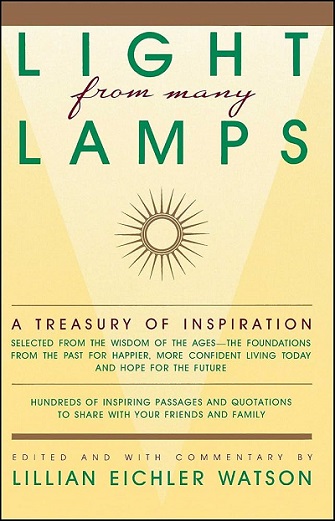
This is an inspirational book that was recommended by India’s former President & renowned scientist Dr A P J Abdul Kalam. In an article that I read long back, I discovered the following incident:
| “It was the year 1952 and Kalam was a young student pursuing a B Sc degree course. He visited Madras (now Chennai) to purchase some books and attend some lectures. In a dilapidated book shop, he discovered ‘Light From Many Lamps’ and after flipping through the pages, he purchased it immediately.” |
Dr Kalam described ‘Light From Many Lamps’ as his ‘life companion’ and his autobiography reflects the philosophy contained in this book.
I have read this book many times and found it to be immensely useful. Here is the brief review:
Topics Covered
The many topics covered in the book are as follows:
- Faith and Inner Calm
- Happiness & The Enjoyment of Living
- Courage, Confidence and Achievement
- Self-Discipline and Peace of Mind
- Love, Family and Relationships
- Making The Most of Old Age
- Hope and Realistic Optimism for The Future
Salient Features of the Book
The book encompasses a vast number of quotes and passages from renowned books. In addition, sayings & writings by great men & women throughout history are available. You can also find inspirational material from every major religion in many chapters.
One distinguishing feature is that each chapter begins with the real-life story of a famous person that describes struggle & victory despite all odds. The author has also added her own comments to explain subtle aspects of the story and she has explained how readers can apply the wisdom into their own lives.
Here are a few quotes from the book:
“The grand essentials to happiness in this life are something to do, something to love, and something to hope for.
-Joseph Addison “
“Happiness is a perfume you cannot pour on others without getting a few drops on yourself.
-Ralph Waldo Emerson”
“Whatever you are by nature, keep to it; never desert your line of talent. Be what nature intended you for, and you will succeed.”
-Sydney Smith”
“This is the sum of all true righteousness: deal with others as thou wouldst thyself be dealt by. Do nothing to thy neighbor which thou wouldst not have him do to thee hereafter.
-Mahabharata”
“It takes solitude, under the stars, for us to be reminded of our eternal origin and our far destiny.
-Archibald Rutledge”
Final Summary
This book can be read again and again and it can serve as a rich inspirational source in moments of despair and distress. You will find yourself reaching out to this book from time to time.
The last chapter of the book may seem somewhat dated because it reflects the geopolitical scene of the immediate post second world war era. This is not surprising as the book was published in 1951.
Overall, this is a great book and you will certainly be wiser & motivated after reading it.
About the Author
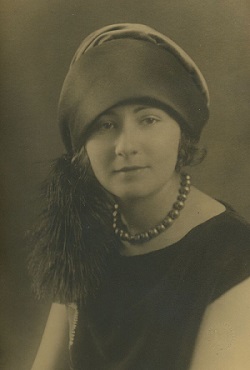
Lillian Eichler Watson (1901/1902- 1979) was an American author and copywriter. Realizing that there was a need for new American immigrants to learn correct American etiquette, she wrote two books that became very famous: The Book of Etiquette (later reprinted as The Standard Book of Etiquette) and Etiquette Problems in Pictures. Another famous book of hers is The Standard Book of Letter Writing.
पुस्तक की समीक्षा पढ़कर पुस्तक खरीदने की इच्छा हो रही है।
मुझे पता नहीं यह पुस्तक मुझे कहां मिलेगी या इसे मैं कैसे खरीद सकता हूं !
पुस्तक के प्रकाशक या प्रचारक का पता हो तो जरूर बतायें।
आप यह पुस्तक इस वेबसाइट से आसानी से खरीद सकते हैं : https://www.amazon.in/Light-Many-Lamps-Watson/dp/0671652508?s=bazaar
यह पुस्तक आप फ्लिपकार्ट से भी खरीद सकते हैं : https://www.flipkart.com/light-many-lamps/p/itmd5f9e331578fd
आप यह पुस्तक पढ़कर बहुत लाभान्वित होंगे
यह पुस्तक मैं कहां से और कैसे खरीद सकता हूं ?